
Criminal Cases in the Appanoose County Courts
The Iowa District Court for Appanoose County uses the unified state court structure. It hears felony, misdemeanor, traffic, and other district matters at the courthouse in Centerville. Iowa does not maintain a separate county-level municipal criminal court for Centerville. Simple misdemeanors and ordinance matters also enter the unified system when filed. The Appanoose County Attorney prosecutes eligible state-law charges, but the prosecutor does not maintain the public docket.
The Clerk of District Court is the custodian of the judicial case file. That file is distinct from the arresting agency’s report and the jail booking entry. Appanoose County criminal court records begin when a complaint, trial information, indictment, or other charging document reaches the court. The same file then collects hearings, motions, orders, pleas, judgments, financial obligations, and later events. Judicial District 8A administers the local court, while the clerk supplies case access and copies.
Iowa District Court Clerk
201 N. 12th St.
Centerville, IA 52544
641-856-6101
appanoose.county@iowacourts.gov
Appanoose County Attorney
201 N. 12th St.
Centerville, IA 52544
641-437-7178
Prosecution office, not the case-file counter
One Appanoose Criminal Court System
Every local criminal level feeds the Iowa District Court rather than a separate city docket. This matters when a citation lists a city ordinance or when an arrest was made by Centerville Police. Searchers should still select Appanoose County in the statewide court system. A city name identifies the enforcing government; it does not create a stand-alone public municipal case portal.
The Iowa Judicial Branch court directory confirms the court and clerk route. Its directory page also shows why the county courthouse, not the co-located sheriff and police complex, is the place for filed pleadings and certified judgments.
The official directory view provides a visual check on the proper court channel.

Use the directory contact when a public portal result lacks a document or when an older Appanoose County case does not appear online.
How to Search Case Records
Iowa Courts Online is the first remote channel for Appanoose County criminal cases. Basic public access is free. A name search works best with enough detail to separate similar people, while an exact case number is the safest key. Online data is not the official record, and some schedules, bond data, service returns, exhibits, or documents require a subscription, a public terminal, or help from the clerk.
- Open trial court case search and select Appanoose County.
- Search by case number or enter the party name. Use at least two letters in the last-name field.
- Narrow by first name, case type, or date fields. For DOB Search, enter exact birth date, first name, and last name.
- Open the matching Appanoose County docket. Read every charge, amendment, disposition, and judgment entry.
- Ask the clerk for a named filing, terminal access, or a certified copy when authenticity or full detail matters.
| Field Label | Type | Required | Notes |
|---|---|---|---|
| County | Dropdown | For county narrowing | Select Appanoose |
| Last or firm name | Text | For name search | At least two letters; percent sign can act as a wildcard |
| First name | Text | Optional for basic name search | An initial is entered without a period |
| Date of birth | Date | Required in DOB Search | Exact DOB, first name, and last name required; no wildcard |
| Case number | Text | Alternative search key | Case ID Search also requires county and case type |
| Case type | Dropdown | Mode-dependent | Options include felony and misdemeanor groupings |
New citations can take up to fourteen days to appear. Public trial cases generally become visible one business day after entry and update in real time after that.
Older Appanoose Case Record Fallbacks
A failed search is not a reliable no-case result. Confidential or juvenile matters, city parking tickets not filed with the clerk, and older records outside the case-management system can be absent. The court’s help material says public trial cases after 1998 should generally be represented. For an earlier file, a gated document, or a record with unclear indexing, call the Appanoose County clerk and give the most complete case identifier available.
The official Appanoose County forms index is another useful routing page.
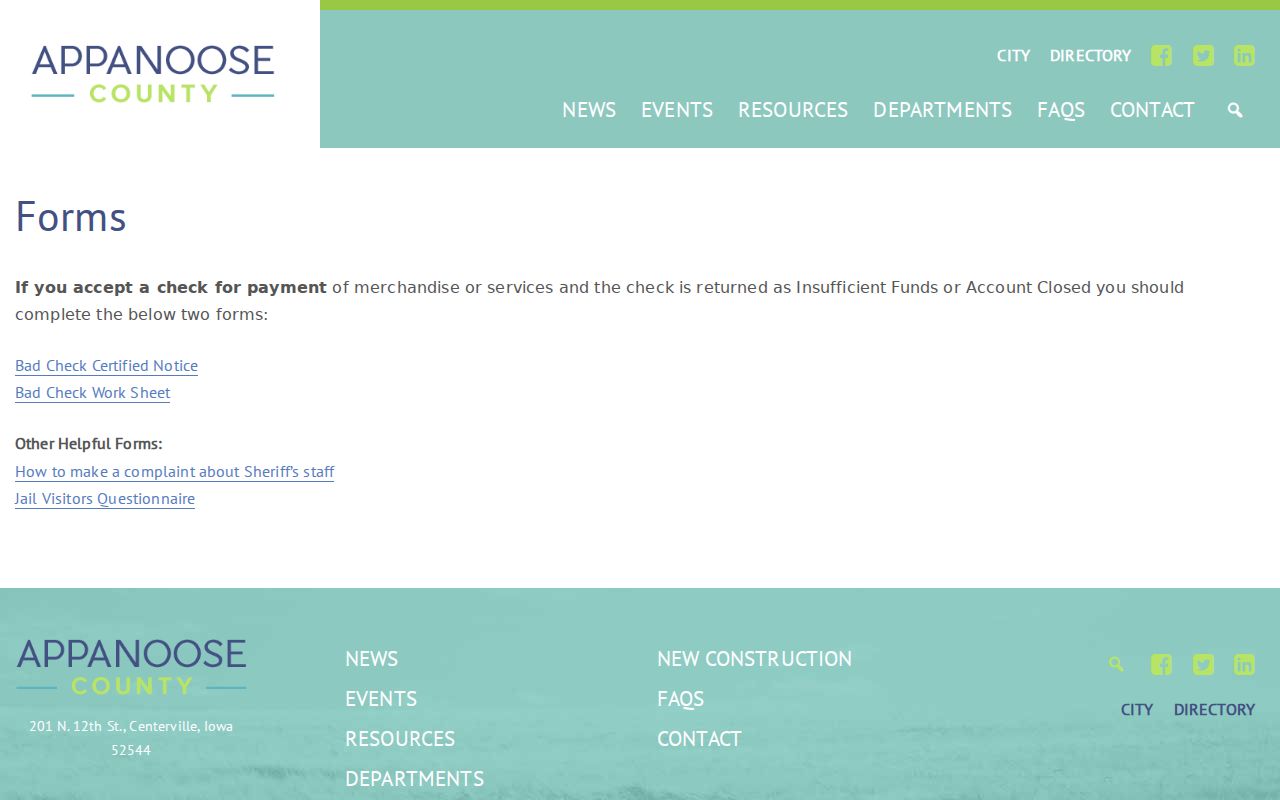
County forms do not replace the statewide court docket, but they keep local agency paperwork separate from judicial filings.
Note: Trial documents may be viewed without charge at the public-access terminal in the county where the case was filed.
What the Case File Shows
An Appanoose County criminal case file records allegations and the court’s response to them. The header identifies the county, case number, title, case type, status, and filing date. Party fields identify the defendant, the State or city, attorneys, and appearances. Charge rows deserve close reading because the filed count may later be amended, dismissed, merged, or resolved differently from another count.
| Case Number & Court | The unique Iowa case identifier, Appanoose County, case type, status, and filed date. |
|---|---|
| Charging Document | A complaint, trial information, or indictment stating filed allegations, not proof of guilt. |
| Docket Entries | A dated sequence of filings, hearings, orders, pleas, warrants, and later actions. |
| Hearing Dates | Public hearing type, date, time, location, and judicial officer when displayed. |
| Disposition & Judgment | The outcome for each count, such as conviction, dismissal, or acquittal, plus judgment date. |
| Sentence & Conditions | Public sentence terms, fines, costs, restitution, and later satisfaction or revocation entries. |
Financial fields can show fines, surcharges, court costs, restitution, payments, and a public balance. They do not replace the judgment. The official Iowa court debt lookup and payment instructions explain how those obligations are found.

That payment view is one part of the record. Always return to the Appanoose County docket for the charge outcome and judgment.
Appanoose Case Status Is Not Outcome
A “closed” label reports the file’s administrative state. It does not say whether the defendant was convicted, acquitted, received a deferred judgment, or had the charge dismissed. Read the disposition attached to each count and then inspect the judgment. Multi-count Appanoose County criminal cases may have different outcomes within one file.
Iowa terms also carry precise meanings. A trial information is the prosecutor’s formal charging paper for an indictable offense. Arraignment is the hearing where the charge is stated and a plea is taken. A disposition is the outcome of a charge or case. A deferred judgment withholds judgment while set conditions are completed. These terms should not be collapsed into a single “case status.”
- Dismissal
- A charge ends without a conviction.
- Acquittal
- A not-guilty outcome after adjudication.
- Deferred judgment
- An Iowa process that withholds judgment during required conditions.
- Disposition
- The recorded outcome for a charge or case.
Stages of a Criminal Case
After a local arrest or referral, the Appanoose County Attorney decides whether and what to charge. A filing creates a separate court number. Arraignment records the plea. Pretrial entries can include motions, discovery events, scheduling, amendments, and bond issues. The matter then reaches a plea, trial, dismissal, or other disposition. A conviction can lead to sentencing and a financial ledger, while later appeals, probation proceedings, warrants, or expungement orders may add more docket events.
Case flow: Charges Filed › Arraignment › Pretrial › Plea or Trial › Disposition › Sentencing
The court case does not start at booking. A jail intake charge reflects the arresting agency’s allegation at that time. The filed Appanoose County charge may confirm, change, add to, or omit it. Readers tracing the earlier custody event can consult the county’s arrest history channels, then use the court docket for the filed case and result.
Appanoose Criminal Charges and Prosecution
The County Attorney evaluates law-enforcement referrals and prosecutes eligible charges. That role explains why the charge at booking can differ from the charge in court. Prosecutors may file, amend, add, or decline allegations based on the referral and applicable law. The clerk, not the attorney, remains the public case-file custodian.
The official Appanoose County Attorney page identifies the prosecuting office and its contact information.
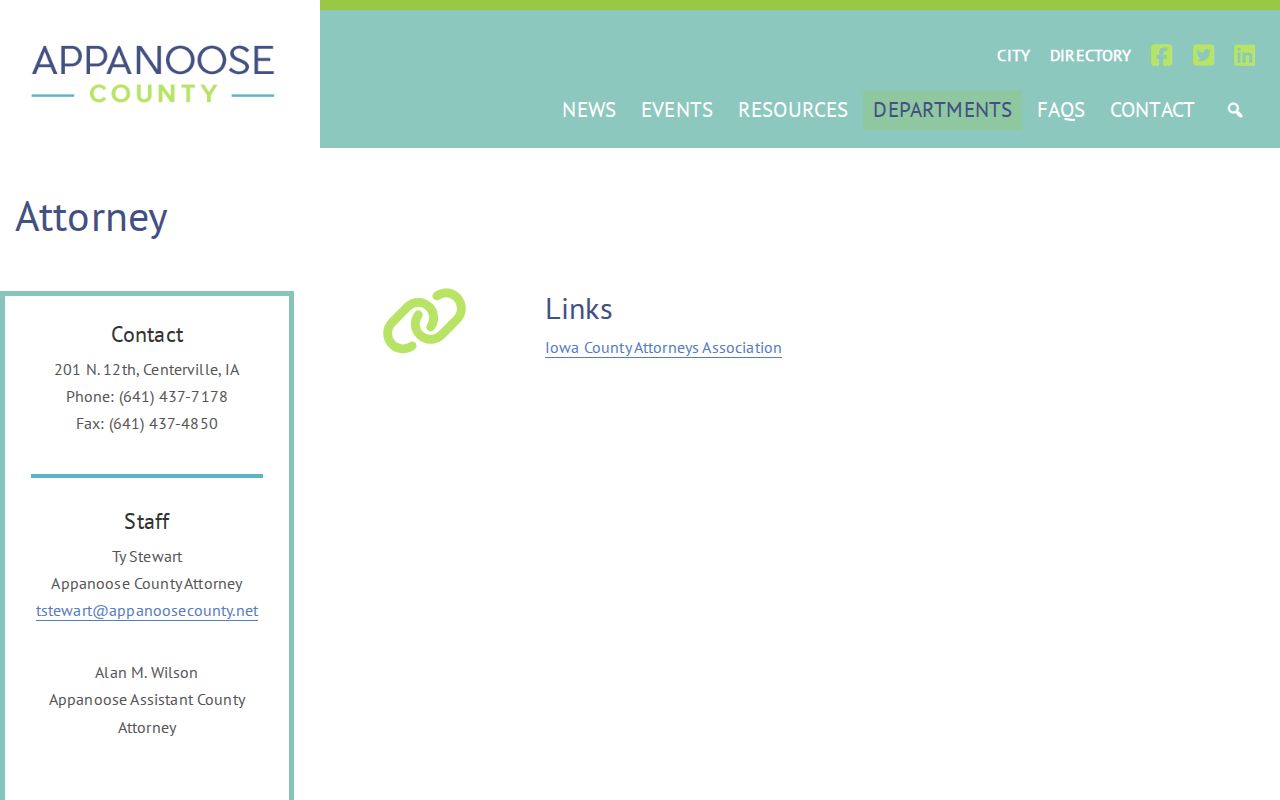
This distinction prevents a common routing mistake: questions about public pleadings, certified outcomes, and docket copies go to the clerk even though the County Attorney filed the prosecution.
Access & Restrictions
Iowa Code section 22.2 provides a right to examine and copy public records unless another law makes them confidential. Court access still excludes protected identifiers and confidential material. Juvenile court records are generally restricted under Iowa Code section 232.147. Sealed or expunged entries, victim or minor details, Social Security numbers, and financial identifiers may also be withheld or redacted.
Public search is a view of available fields, not a promise that every filing is downloadable. If an Appanoose County criminal case cannot be found, ask the clerk whether the matter is older, confidential, indexed differently, or only available at the public terminal. Do not ask staff to disclose material that a statute or court order protects.
Access rule: A missing online case can reflect age, confidentiality, expungement, or indexing. It does not prove that no case ever existed.
Appanoose Deferred Judgment Records
Iowa’s court-level expungement and DCI repository rules do not always produce the same view. After a qualifying deferred judgment is discharged and required obligations are paid, the court can expunge it under Iowa law. DCI explains that the event remains in its repository marked as discharged. It is treated as a non-conviction and released only with subject authorization.
For self-review, check both systems. First, inspect the Appanoose County docket and obtain the court order. Then request a signed-release result from DCI. If repository data are wrong, send DCI the disputed entry and supporting order. DCI may request fingerprints to confirm identity. Iowa Code chapter 901C covers several court expungement paths, while the Iowa Judicial Branch court forms collection supplies current forms.
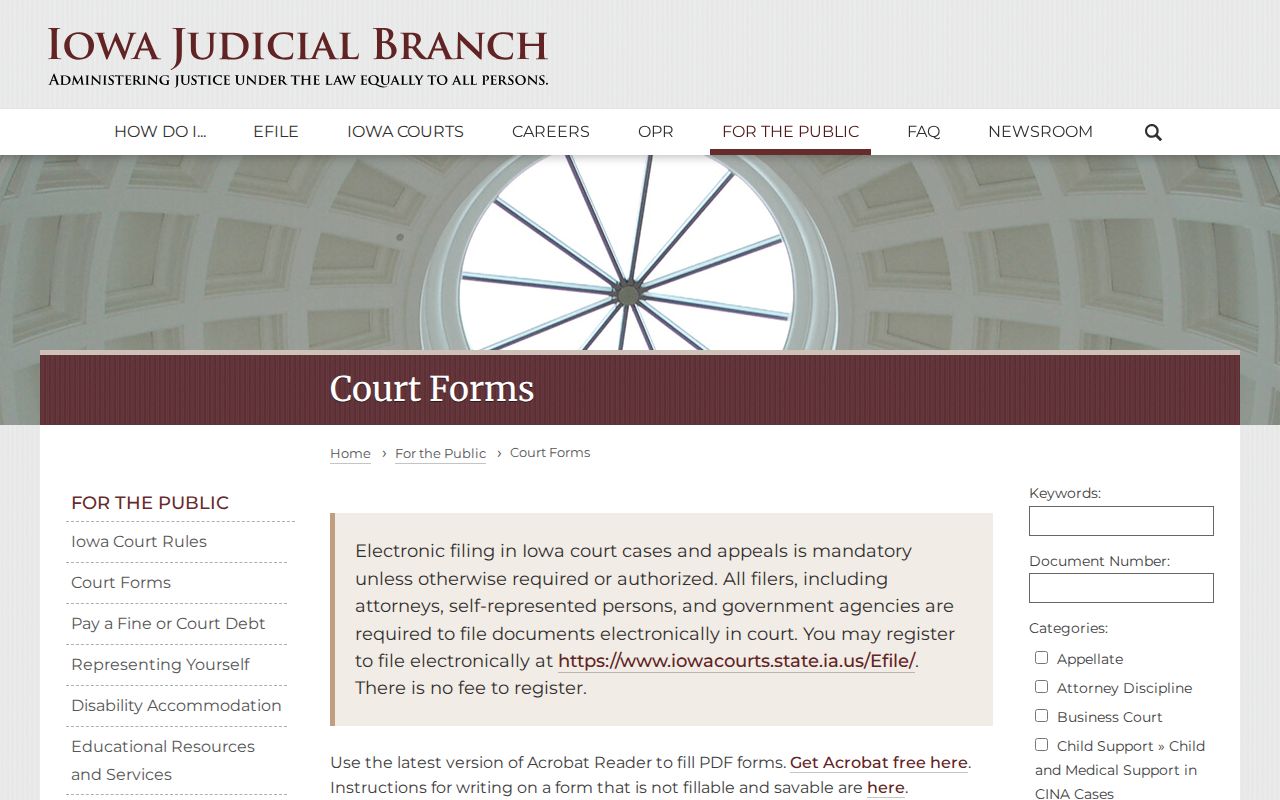
The forms page helps identify a filing, but the exact Appanoose County outcome and controlling statute determine whether relief is available.
Note: Expungement of a court view does not promise that every separately held agency record has been destroyed.